
Have a fear or strong anxiety about visiting the dentist for treatment?
Sedation dentistry is very safe and pain-free
With little to no memory of your procedure.

Sleep dentistry, also commonly referred to as twilight sedation or sedation dentistry, is an alternative method of undergoing dental work that involves an advanced form of sedation.
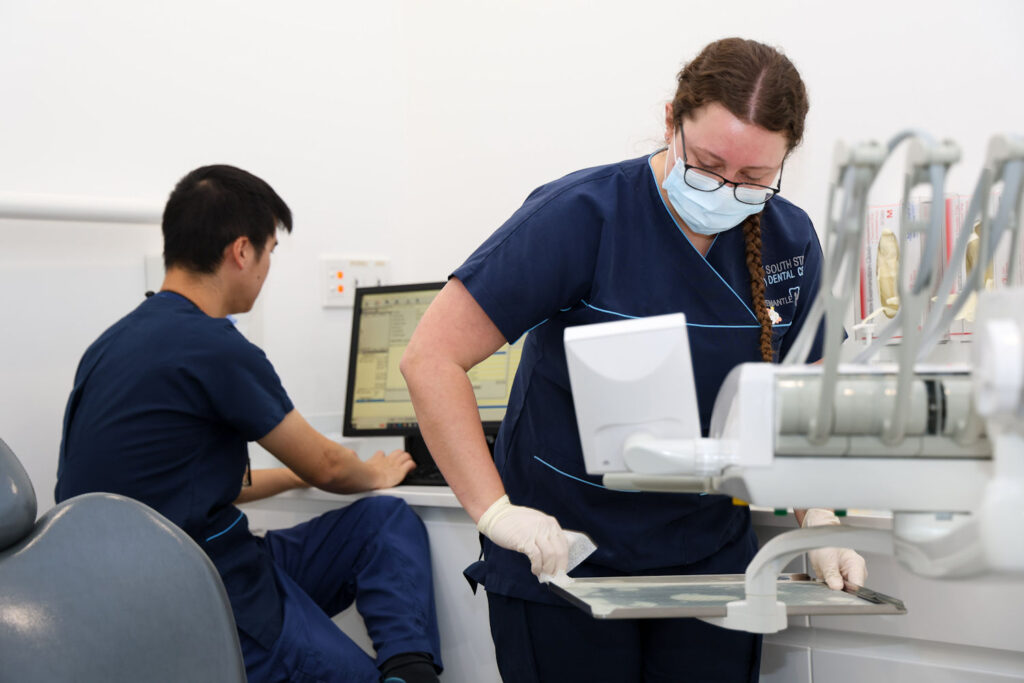
Sleep dentistry has quickly gained popularity as the preferred method of sedation for those who suffer from severe phobias or anxiety when undergoing dental treatment.
Prior to the dental procedure, a small amount of sedatives is delivered intravenously by our highly experienced registered medical anaesthesiologist. The sedatives are used to induce a relaxed but conscious state that ensures a pain-free and comfortable experience at the dentist. Whilst sedated, patients experience muscle relaxation, drowsiness and do not feel any pain while undergoing treatment. The sedation also leaves patients feeling like time has passed fairly quickly and with little to no memory of their dental procedure.
The after-effects of sedation can leave patients feeling disorientated, this is completely normal; however, you will need to arrange for a family member or friend to accompany you home after your dentist appointment. Patients who undergo sleep dentistry at our Perth clinic will also be unable to drive or operate machinery for a minimum of 24 hours.
Depending on the nature of your scheduled surgery, you will receive specific instructions and medication schedules you need to follow in the days leading up to your appointment. Please follow these carefully.
We want your visit to our sleep dentistry practice to be as brief and comfortable as possible. Therefore, we try to ensure that most sedative dentistry treatments and dental procedures are completed in a single visit.
Here at South Street Dental, we pride ourselves on delivering an unsurpassed level of care to ensure your wellbeing. While sedation dentistry is very safe, we always have an attending anaesthetist to administer the IV drugs and monitor your vitals throughout the entire procedure; so you can rest assured, you are in safe hands when you visit us for your sleep dentistry appointment at our Perth clinic.
If you suffer from a phobia or have anxiety around visiting the dentist and need to undergo treatment, sleep or sedation dentistry can help.
For your upmost safety and comfort during complex surgery, general anaesthesia can only be administered in a hospital. Southbank Day Surgery is known for evidence-based surgical care and excellent patient outcomes. Dr Chan is one of few dentists who are fully licenced and accredited to perform dental surgery in theatre.
In many cases, private health policies will cover the cost of theatre for essential dental procedures in an approved hospital. We can help enquire on your behalf.
Southbank Day surgery is a Medibank Member’s Choice Hospital and also a HBF Member’s Plus Povider.
Learn more about the hospital and what to expect when preparing for surgery
Local anaesthetics are drugs that temporarily stop any sensations in the area they are injected into. Once an area is numbed, you won’t feel anything until the numbing agent wears off.
Inhalation anaesthesia (applied through “laughing” gas) and twilight sedation (applied through an intravenous drip) create a sense of detachment from the activities around you and in your mouth. You don’t go to sleep. But you also don’t care about or remember what happened.
General anaesthesia knocks you out completely. It is like falling asleep. It is done in a surgical suite with a full theatre team.
Local anaesthesia is the injection of numbing agents directly to the site of the procedure.
The level of discomfort is usually very minor. It can vary depending on the patient and the location of the injection.
We always apply a topical swab first used to numb the surface of the area to make injections even more comfortable.
Local anaesthesia is used for almost all reparative, restoration and surgical procedures such as fillings, crowns, extractions and implants.
The numbing effect of local anaesthesia typically dissipates within a couple of hours. Long-term side effects are extremely rare.
If you only have a mild apprehension of needles or dental procedures, a milder alternative to twilight sedation could be inhalation sedation. This is achieved by breathing in nitrous oxide gas (laughing gas) during the procedure.
The gas is colourless, odourless and generally safe. It induces a mild state of euphoria, warm sensation, and wellbeing.
No. There are no side effects with the use of inhalation sedation when administered properly.
The euphoric effect of inhalation sedation wears off pretty much immediately after the gas supply is turned off. You will be able to drive and function normally within 5-10 minutes of coming off the gas.
Twilight sedation is also called sleep dentistry or IV sedation.
Twilight sedation (also called sleep dentistry or IV sedation) uses an intravenously delivered sedative to induce a deeply relaxed, but still conscious, state.
A pulse oximeter (a small sensor) will be clipped to either your earlobe or finger to monitor your heart rate and blood oxygen level.
Normal local anaesthetic will still be administered to block the pain.
Although twilight sedation is generally very safe, there is always an element of risk with any medical procedure. This is why we always have a fully-qualified anaesthetist administer the IV drugs and monitor your wellbeing throughout the entire procedure. You are never left alone.
There are some special arrangements you need to take into account – such as organising a family member or friend to take you home after the procedure. See Twilight Sedation Instructions.
No. Twilight sedation is not the same as general anaesthesia.
Although twilight sedation is also called sleep sedation or sleep dentistry, you are not actually put to sleep like general anaesthesia. Twilight sedation is not as risky as general anaesthesia. You will be able to respond to requests made by the dentist.
No. Like twilight sedation, you remain fully conscious.
You can still respond to the dentist’s requests, but are just not bothered by what is going on.
Memory loss can accompany sedation dentistry as a (positive!) side effect of the sedation drugs. Any memory loss is only confined to the period of the sedation process. You may not remember the procedure.
There may also be a sense of disorientation for a while after the procedure. This is normal.
You do need to arrange for a family member or friend to accompany you home after a sedation dentistry appointment. You will not be able to drive or operate machinery for at least 24 hours. See the Twilight Sedation Instructions to prepare yourself for a sedation dentistry appointment.
Twilight sedation is perfect for patients who have severe phobias about needles and dental procedures. IV sedation not only removes your anxiety and fear, but also enables the procedure to proceed much faster.
For complex procedures like oral surgery and dental implants, we usually recommend sedation dentistry as a standard part of the procedure.
To maximise your safety, we always use an anaesthetist to administer twilight sedation and monitor your wellbeing throughout the procedure.
Although twilight sedation carries less risk than general anaesthesia, it is not 100% risk-free. Hence the dentist should focus on the procedure while the anaesthetist looks after your sedation.
We have several qualified and experienced anaesthetists we use.
If you think you will benefit from twilight sedation, we can help you understand the benefits and risks.
Appointments with our anaesthetists are subject to their respective availability. Your chosen anaesthetist will usually require a pre-appointment consultation with you. This is normally done via a phone call.
Find out more about sedation options
Complete the form below and our team will get in touch to organise a time for your consulation.