
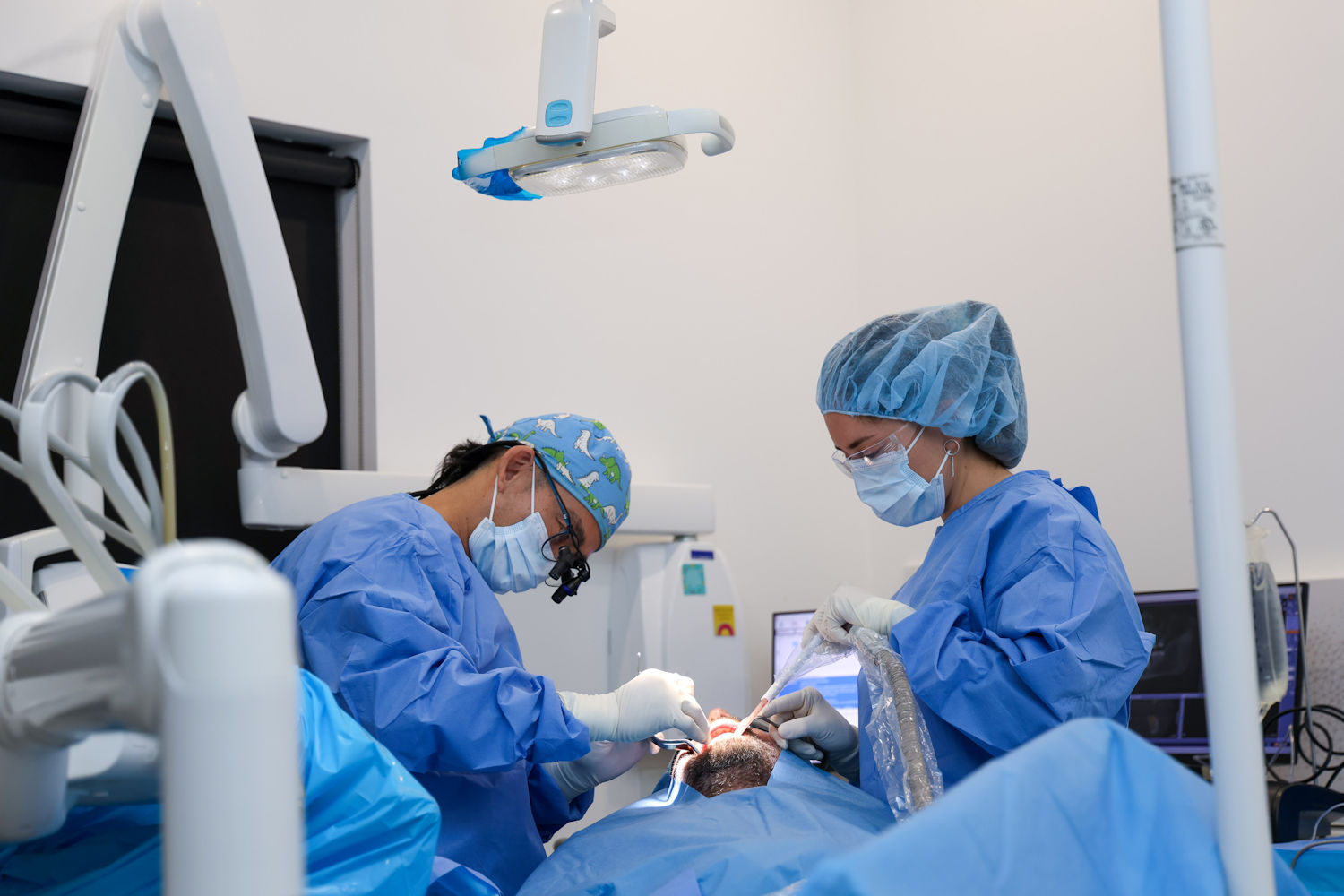
We offer all sedation options, including general anaesthesia, making us a preferred choice for wisdom teeth removal.
Dr. Chan is among the few accredited dentists to perform surgery at SouthBank Hospital for your ultimate comfort and safety.
If you need a second opinion, or are worried about symptoms which may be due to impacted wisdom teeth, contact us for a free consult.
This appointment includes:
*remains the property of South St Dental, but available for purchase should you require.
Please note that you will be seeing Dr. Chan for this appointment, a “no-show” fee will apply in accordance with our booking/cancellation policy.
In-chair wisdom teeth removal with local anaesthetic ranges from $200 to $650 per tooth.
Wisdom teeth extraction cost vary due to surgical time and skill required to address factors like root complexity, depth, angle, proximity to facial nerves and other medical conditions. Hence a full examination with imaging is the only way to diagnose impacted wisdom teeth.
Additional costs apply for IV sedation or general anaesthesia, billed separately by the attending anaesthetist.
Treatment involving extensive or complex surgery is ideally performed in theatre at our affiliated hospital, Southbank Day Surgery, where Dr Henry Chan is a registered dental specialist.
For patients with private health insurance choosing general anaesthesia, hospital fees are typically fully rebated, a significant cost saving of around $3000.
Southbank Day surgery is a Medibank member’s choice hospital and also a HBF Member’s Plus provider.
We have various payment plan options to allow you to begin treatment at your convenience and manage costs over time.
If you need a second opinion, or are worried about symptoms which may be due to wisdom teeth, contact us for a free consult.
Dr Henry Chan has been an advocate of dental implants since 2006 as a way of fundamentally improving the quality of life for his patients. He has devoted his professional life not only to the study and practice of implant placement, bone and sinus graft surgery but also to advanced biological therapies.
His extensive specialist education continually exceeds the state’s requirements and he has completed postgraduate courses in London, Paris and Brazil. He is one of few that hold a Masters of Oral Implantology from the prestigious Goethe University in Frankfurt.
Wisdom teeth are the third set of molars that typically emerge in late adolescence or early adulthood. People often choose to have their wisdom teeth removed for several key reasons:
With local anesthesia, you’ll feel no pain during the procedure, but maybe some discomfort from pressure and keeping your jaw open. For multiple or deeply impacted wisdom teeth, most people prefer to be completely asleep and opt for sedation or general anaesthetic. Post-surgery, as the lingering local anaesthetic wears out, some soreness and swelling should be expected, but can be managed with prescribed or OTC pain relief.
Expect some light bleeding and swelling of the gums which will settle overnight. Your mouth may feel tight and sore to open for the next few days, similar to a pulled muscle. Aesthetically your jaw may look ‘soft and round’ with a hint of a 5 o’clock shadow. We don’t suggest booking photoshoots for that weekend. Strictly following your aftercare advice should have you back to normal within a week.
The usual risks of surgery should be considered. Complications are rare but can include infection, dry socket, or nerve damage. Dr Chan will discuss these and how to minimise them before the procedure.
Ultimately it’s a personal choice. If it is an option available to you, being asleep during the procedure offers several advantages:
General anaesthesia allows Dr. Chan to work more precisely and efficiently without patient movement.
The hospital setting is the only place to safely administer general anaesthesia. With a full medical team at the ready, we always recommend this option for our patients with existing medical conditions.
Knowing you are safe, asleep, and removed from the noises and visuals of a dental procedure helps diminish anxiety. Relaxed muscles mean less strain and fatigue on your jaw, aiding in a smoother recovery.
Most private health hospital cover will rebate the cost of theatre.
Complete the form below and our team will get in touch to organise a time for your consulation.