
A healthy smile requires maintenance like regular cleanings, examinations, and preventive work.

Backed by decades of experience and strict protocols, our multidisciplinary team cover all aspects of dentistry for the whole family.
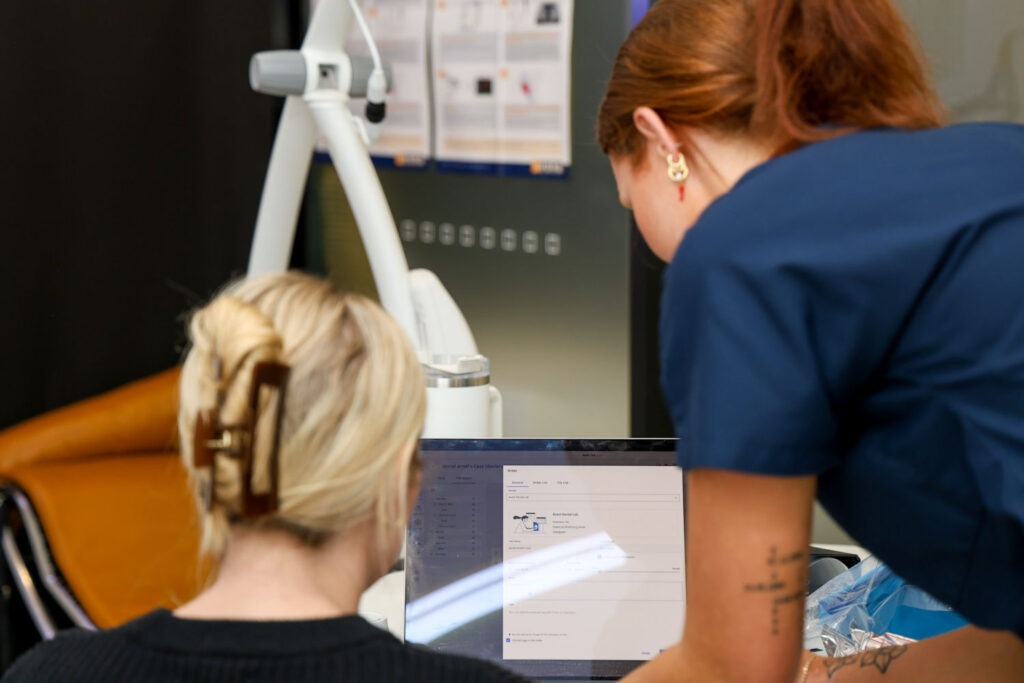
Experience counts. A team that has known and worked with each other for years will naturally provide better care and a more cohesive experience for you.
Our clinic is based in O’Connor, in close proximity to Fremantle, and services the wider Perth metro area and surrounds.
The typical dental cleaning appointment lasts less than thirty minutes, but here at South Street Dental, we extend that to an hour. Our therapists dedicate their full attention to only seven patients a day.
A check-up by our O’Connor dentist typically happens at the end of every professional cleaning appointment.
An x-ray may be needed from time to time.
Annual Professional cleaning and check-ups at our O’Connor dental surgery are usually covered by private health.
If there is minor decay or damage to a tooth, a filling may be required.
Fillings can usually be fitted in a single appointment with local (topical) anaesthetic.
We generally use the “white” composite fillings instead of silver amalgam.
We will always aim to preserve a natural tooth. When an extraction is indicated, it can be done in-chair or in theatre.
Extractions can also precede other procedures like dental implants, dental bridges and orthodontics.
We also do wisdom teeth extractions at our Fremantle dental clinic.
If you have a severe toothache, heightened sensitivity, a bad taste or abscess on your gum, the living part of your tooth (root) may be damaged.
A root canal treatment removes the damaged tissue inside the tooth and seals it with a crown. Root canals are usually done in three stage.
See Crowns and Bridges for more information.
Tempromandibular joint (TMJ) disorders are more common than you may realise. The common ones are teeth grinding and jaw clenching. They can lead to chipped, worn or cracked teeth, headaches and sleep disturbances.
Dental splints can be custom-fitted by our dentist in Fremantle and worn in your mouth when you sleep. They work to protect your teeth from damage and also to gently recondition your body to stop these unwanted actions.
There are different types of splints and mouth guards. Book a visit to our O’Connor clinic and our dentist can best advise you on the most appropriate choice.
Snoring or disrupted breathing during sleep can be an indication of Obstructed Sleep Apnoea. Our practitioners will recommend further investigation by your GP if OSA is indicated.
Snoring can be reduced with non-invasive dental devices which work by gently repositioning the lower jaw to maintain a more open airway.
Our 3D custom designed splints and protective devices are crafted using Avant’s advanced manufacturing technology and superior thermoplastic materials.
Dr Henry Chan has been an advocate of dental implants since 2006 as a way of fundamentally improving the quality of life for his patients. He has devoted his professional life not only to the study and practice of implant placement, bone and sinus graft surgery but also to advanced biological therapies.
His extensive specialist education continually exceeds the state’s requirements and he has completed postgraduate courses in London, Paris and Brazil. He is one of few that hold a Masters of Oral Implantology from the prestigious Goethe University in Frankfurt.
Even if you are a perfect brusher and flosser, you cannot remove everything. This is where the dental hygienist plays a critical role.
The sticky film of bacteria on your teeth hardens into a substance called tartar, usually within 24-48 hours. Once formed, and over time, tartar cannot be removed with a toothbrush or floss. It can only be professionally removed by special instruments.
Tartar left to accumulate at and below the gumline is the primary cause of gum inflammation (gingivitis) and, if left untreated, leads to bone loss. By regularly removing this tartar, you halt the disease process before it can cause permanent damage.
Our hygienist will use an ultrasonic tool to vibrate off the accumulated calculus and other unwanted material. The ultrasonic vibrations also remove stains.
Material that is under your gum line is carefully removed with special picks.
After cleaning, your teeth are polished gently and topical fluoride paste may be applied to strengthen them.
Regular examinations are conducted to spot any potential problems early so they can be treated before they get worse.
Problems could be tooth decay, decay under fillings and other restorations, cracks, gum disease and oral cancers.
An x-ray may be required sometimes to check inside teeth and below the gum line. We use the latest digital imaging technology for safe, fast and cost-effective x-rays.
We always aim to save and protect a tooth as much as we can.
When a tooth is damaged or decayed beyond repair, however, or if we need to reduce crowding in your mouth, that tooth will need to be extracted.
Extractions are always performed with local anaesthesia injected into the site of the procedure. You can also request additional anaesthesia such as inhalation (gas) sedation, or twilight (IV) sedation.
Once the anaesthetic has taken effect, the tooth is loosened from the jaw and removed in one operation.
The associated bleeding usually stops within the hour. Full healing is normally achieved after a week.
If the tooth is broken below the gum line, surgical extraction may be required. This can also be done in-chair.
A missing tooth will cause other problems like bite misalignment and jaw bone loss.
We recommend following up each extraction with dental implants or dental bridges; except where the extraction was carried out to reduce overcrowding in your mouth.
A root canal treatment is the last-ditch effort to save a damaged tooth from having to be extracted.
When the living tissue (the pulp) inside the tooth is exposed by tooth decay or breakage, pain and infection can result. Left untreated, the infection could spread into the surrounding tissue or into your jaw bone.
A root canal treatment removes the pulp and infected tissue from inside the tooth. The tooth is then sealed and capped with a crown.
Root canal treatments have a high success rate, with treated teeth often lasting many functional years.
Due to our experience and technology, we can typically complete a root canal treatment in just two visits. In some instances however, two or more visits may be needed.
At the first visit, with the tooth numbed, specialised tools are used to carefully remove the pulp, nerves, bacteria and infected material from inside the tooth. The cleaned tooth is then packed with special material to ensure a lifetime of stability. A temporary crown is fitted.
At the second visit, the tooth is assessed and the temporary crown replaced with a permanent one.
The connection between oral health and overall systemic health is well-established and critically important.
The primary mechanisms for this connection are inflammation and the spread of bacteria. Infected gums are a gateway for minute amounts of bacteria to enter the bloodstream and travel to other parts of the body, triggering inflammation and contributing to new or worsened health problems.
Complete the form below and our team will get in touch to organise a time for your consulation.